
Calgary’s winters are unpredictable. They can bring heavy snowfall, freezing temperatures, and sudden warm spells that can cause ice dams along roof edges. These barriers may lead to leaks, shingle damage, and safety risks. Therefore, we have to be prepared before the damage happens.
Prevention starts with understanding how ice dams form and managing snow safely. Proper attic insulation, regular inspections, and reliable snow removal help protect properties through winter.
Domiark Constructions supports house owners and businesses with maintenance guidance. In this guide, let’s understand the steps to prevent ice dams in Calgary.
What Is an Ice Dam?
An ice dam is a ridge of ice that forms near the edge of a roof. It usually develops when heat escapes from the home into the attic and warms the upper part of the roof. Snow melts, and the water flows towards the colder roof edge. There, it freezes again and gradually builds into a barrier.
Water can collect behind the ice and seep beneath shingles, causing ceiling stains, damaged insulation, peeling paint, or mold. Ice dams can also strain roof edges and gutters.
Why Are Ice Dams Common in Calgary?
Calgary’s cold winters and changing temperatures encourage repeated melting and freezing. Sun can warm a roof during the day, while evening cold freezes melt water. Poor ventilation, uneven insulation, air leaks, and blocked gutters increase the risk. Preparing before winter can help reduce it.
1. Improve Attic Insulation and Ventilation
Keep indoor heat from escaping into the attic. Check that insulation is sufficient, evenly distributed, and in good condition. Gaps around attic hatches, plumbing vents, and light fixtures can let warm air rise into the roof space.
Proper ventilation helps maintain a consistent roof temperature. Because insulation and ventilation work together, improving only one may not solve the problem. A qualified professional can identify air leaks and recommend suitable improvements.
2. Remove Excess Snow Safely
Removing excess snow reduces the amount available to melt and refreeze. After significant snowfall, arrange an assessment and safe clearing if snow is accumulating heavily or ice dams have formed before.
Roof work is dangerous. Never climb onto a snowy roof or use sharp tools that can damage shingles. For steep roofs, tall buildings, or heavy accumulations, hire trained professionals.
Clear driveways, entrances, steps, and walkways promptly, before snow compacts and becomes slippery ice.
3. Keep Gutters and Downspouts Clear
Leaves and twigs can block gutters and downspouts, restricting drainage during a thaw. Before winter, clean the system and ensure downspouts direct water away from the building.
Clean gutters alone cannot prevent every ice dam, since heat loss is often the main cause. Still, good drainage helps manage melt water. Never chip at frozen gutters or pull on ice; this can cause damage or injury.
Recognize the Warning Signs
Large icicles and thick ridges of ice along roof edges can signal repeated melting and freezing. Other warning signs include ceiling stains, damp attic insulation, peeling paint, or moisture near exterior walls. Check the property after major snowfalls and temperature swings. If ice build-up keeps returning, investigate the underlying cause instead of simply removing the visible ice. Early attention may help prevent more expensive repairs.
Are Roof Heating Cables Helpful?
Heating cables can create drainage channels in specific problem areas, such as roof edges and valleys. However, they do not fix heat loss or poor attic ventilation. They must be selected and installed correctly, following manufacturer instructions and electrical requirements. Consider them a targeted measure rather than a replacement for insulation, ventilation, roof maintenance, and safe snow removal. Ask a qualified professional whether they suit your roof.
Residential Snow Removal: Protecting Homes and Families
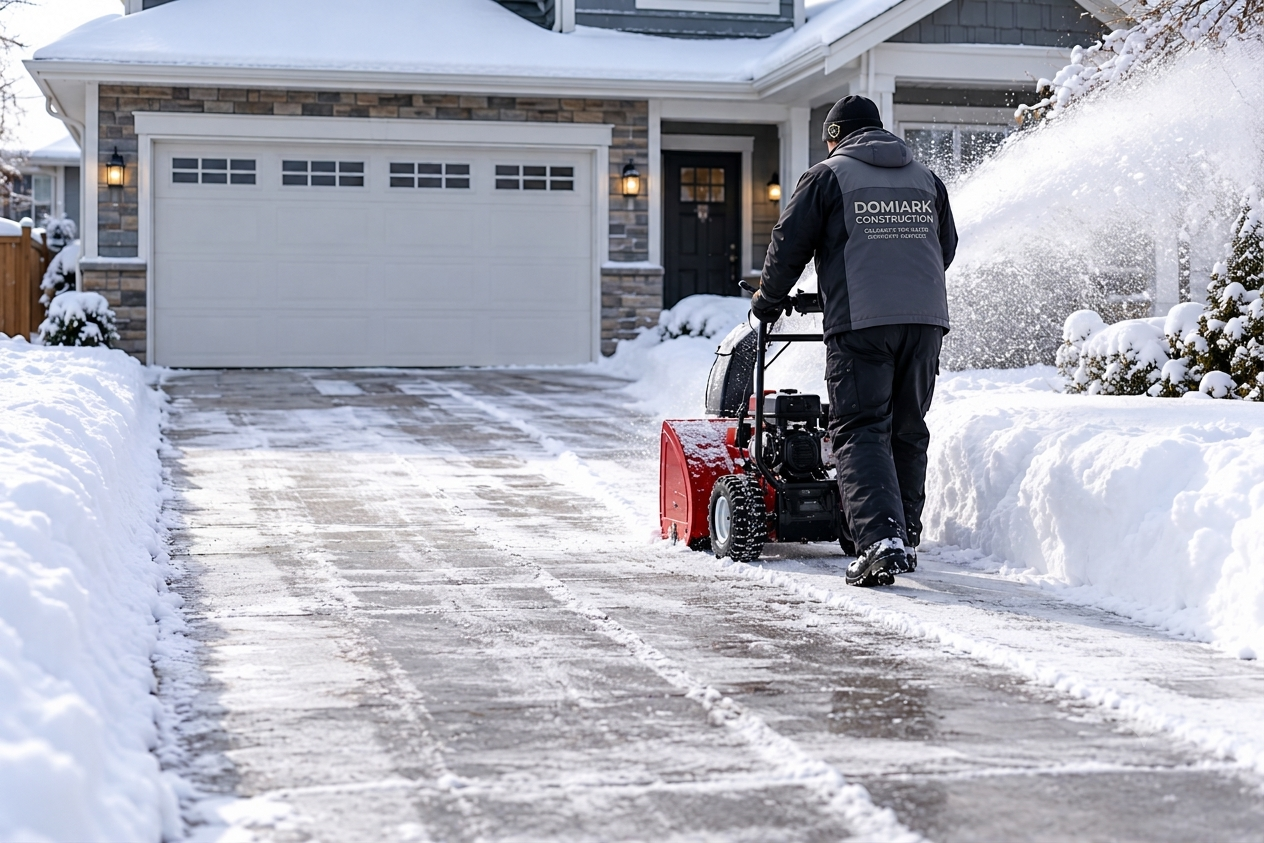
Residential snow removal involves more than clearing a driveway. Snow-covered steps, sidewalks, and paths can endanger residents, visitors, delivery workers, and neighbors. Clear them promptly to improve access and reduce slips.
Plan where snow will be piled. Do not block drains, entrances, sight lines, walkways, or fire exits, and avoid pushing snow onto neighboring property. During prolonged snowfall, clearing in stages is easier than waiting for snow to compact.
A service may help busy households and properties with long driveways or several access routes. Ask providers about service frequency, response after heavy snowfall, ice-control options, and protection for paving and landscaping.
Commercial Snow Removal: Keeping Businesses Accessible
Commercial sites have larger demands. Offices, shops, apartment buildings, and industrial properties may include parking lots, loading zones, entrances, and busy walkways. Snow in these areas can disrupt operations and create hazards for employees, customers, tenants, and visitors.
A snow management plan should set priority areas, service triggers, snow storage locations, and de-icing procedures. It should also account for accessible parking, ramps, emergency exits, fire lanes, and delivery routes.
Property managers can keep records of inspections, clearing visits, and ice-control work to monitor service and address concerns. Since conditions change quickly, commercial sites may need repeated visits throughout a storm.
When to Call a Professional
Call professionals when snow is heavy, roof access is difficult, ice dams are extensive, or water has entered the building. A trained team can assess the situation and use suitable equipment.
Do not pour hot water on ice dams, strike ice with tools, or use open flames. These methods can damage the roof or cause injury. If a leak starts, protect belongings if safe and arrange prompt repairs.
Prepare Your Property Before Winter
Prepare before the first major snowfall. Inspect roofing and drainage, check attic insulation and ventilation, repair damaged shingles, and arrange residential or commercial snow removal in advance.
Domiark Constructions understands the importance of protecting properties during Calgary winters. Practical maintenance, safe snow clearing, and timely professional advice can reduce ice-dam risks and keep outdoor areas accessible.
Preventing ice dams in Calgary takes more than removing visible ice. Controlling heat loss, maintaining ventilation, clearing gutters, and arranging safe snow removal all help. Residential snow clearing protects household access, while commercial snow management supports safer entrances, parking lots, and walkways.
Plan early, respond after heavy snowfall, and seek professional help when conditions are unsafe. A consistent local winter routine can protect your property and reduce costly damage.
If you are looking for reliable winter maintenance, connect with Domiark Constructions. We can help you keep your property safe and prepared for Calgary’s winter conditions.