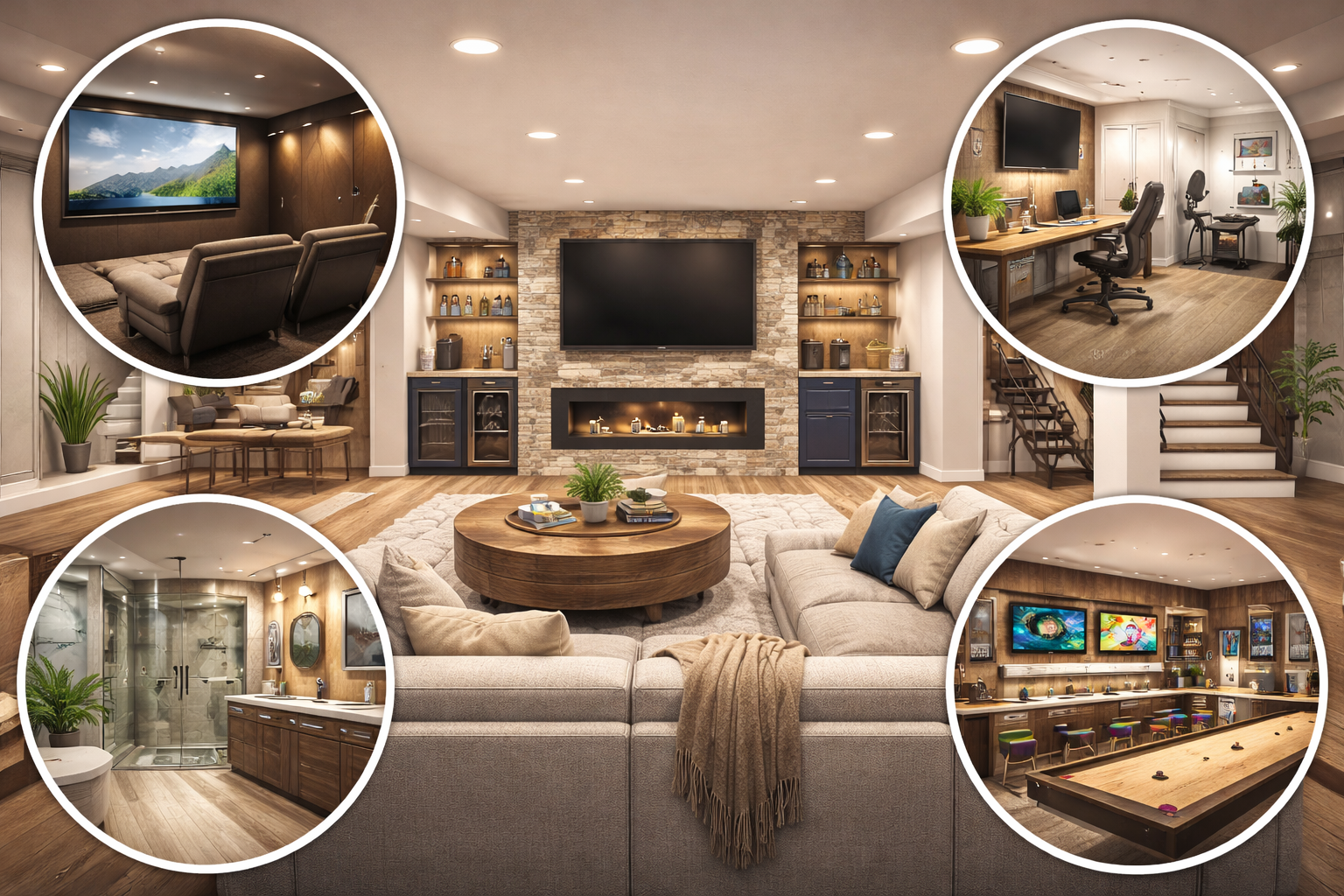

A basement remodel can be one of the smartest investments you make in your home. What’s often a dark, unused
space can become a family room, a rental suite, a gym, or a home office — adding both comfort and real resale
value. But turning a basement into something livable and valuable isn’t just about finishes and furniture; it’s about
strategy, design, and planning from the ground up.
Start with a Purpose — Define the Function First
Before you touch the layout or budget, decide what role the basement should play. Every great renovation starts with
purpose.
Family space: media room, kids’ playroom, or lounge.
Income suite: self-contained apartment with kitchen and bath.
Wellness or productivity area: gym, studio, or office.
Utility upgrade: laundry, storage, or workshop.
Knowing the purpose guides every later decision — from ceiling height to lighting and flooring — and prevents
costly redesigns later.
Assess the Foundation — Fix Before You Build
Basements are unique because they sit below grade. Moisture, insulation, and ventilation are make-or-break factors.
Before adding drywall or decor:
- Inspect for leaks or cracks in walls and floors.
- Address moisture with proper sealing, sump pumps, or dehumidifiers.
- Upgrade insulation to meet code and keep temperatures consistent.
- Plan for egress windows or safe exits if you’ll have bedrooms or living areas.
Investing in structure and dryness ensures long-term comfort and value — no buyer or appraiser will ignore a damp basement.
—
Design for Light and Flow
Basements often suffer from poor natural light and low ceilings. Smart design can turn those weaknesses into cozy features.
Layered lighting: combine recessed lights with wall sconces, floor lamps, or LED strips for warmth and flexibility.
Bright color palette: light walls, ceilings, and floors visually expand the space.
Open layouts: remove unnecessary partitions to increase usable area.
Glass partitions or half walls: maintain division without blocking light.
If possible, enlarge or add windows — natural light instantly boosts perceived value and comfort.
—
Plan Smart Zones and Storage
A good basement layout balances open social space with hidden function.
Create zones: entertainment area, small bar or kitchenette, storage corners, and utility sections.
Incorporate built-in cabinetry or under-stair drawers to keep clutter out of sight.
The more organized and multi-purpose the basement feels, the more buyers see it as a true extension of the home
— not a makeshift space.
—
Choose Materials that Handle Basement Conditions
Even the best waterproofing can’t remove all humidity. Choose finishes that last in a below-grade environment.
Flooring: luxury vinyl plank, tile, or sealed concrete — avoid carpet unless it’s moisture-resistant.
Walls: moisture-resistant drywall or wall panels.
Ceiling: drop ceilings for easy access to pipes and wiring, or drywall for a clean look if the height allows.
Durable materials prevent future maintenance costs and keep the basement looking fresh for years.
—
Add Value Features Thoughtfully
Certain upgrades have higher ROI than others:
A bathroom or wet bar — convenience adds major appeal.
Energy-efficient HVAC and insulation — lowers long-term costs.
Smart home wiring — makes the space ready for work or entertainment.
Soundproofing — especially valuable for rentals, music rooms, or offices.
Each feature should serve the room’s purpose and target audience.
—
Stay Code-Compliant and Future-Proof
Every basement remodel must meet local building codes for safety and value.
Work with professionals for electrical, plumbing, and egress standards. A finished basement without permits can hurt
resale and even void insurance coverage.
If you plan to sell later, document the renovation with permits, receipts, and photos — it adds credibility and boosts
buyer confidence.
—
Design for Flexibility
Trends change, but adaptable spaces retain value.
Design the basement so it can shift from office to guest suite or from playroom to gym without major reconstruction.
Use neutral finishes and modular furniture — buyers and future you will appreciate the flexibility.
—
Balance Budget and ROI
Basement remodels rarely need to be extravagant. According to real estate reports, a well-planned basement
renovation can recover 60–75% of its cost at resale, sometimes more in high-demand markets. The key is balance:
spend where it counts (structure, lighting, insulation) and save on easily replaceable finishes.
—
Final Thoughts
A basement remodel done right feels seamless — not like an afterthought. It’s warm, functional, and integrated with
the rest of the home. Strategic planning at the start — setting a purpose, addressing moisture, designing for light,
and staying compliant — turns that space from underused storage into one of the most valuable parts of your
property.
Think of your basement as potential waiting to be unlocked. With smart design and clear priorities, it can become the
most versatile and rewarding square footage in your home.