Your roof works every day — dealing with sun, rain, wind, and snow. Over time, wear and tear add up. The trick is spotting
the signs early. Knowing what to look for can save you a lot of stress and cost down the line. Here are the most
common red flags.
—
- Age and Material Wear-Out
Most roofing materials have a finite life span. Asphalt shingle roofs often last around 20-30 years. After that, even if
they look okay, the protective properties deteriorate. If your roof is nearing or past its expected age, that alone is a
strong signal to arrange a professional inspection.
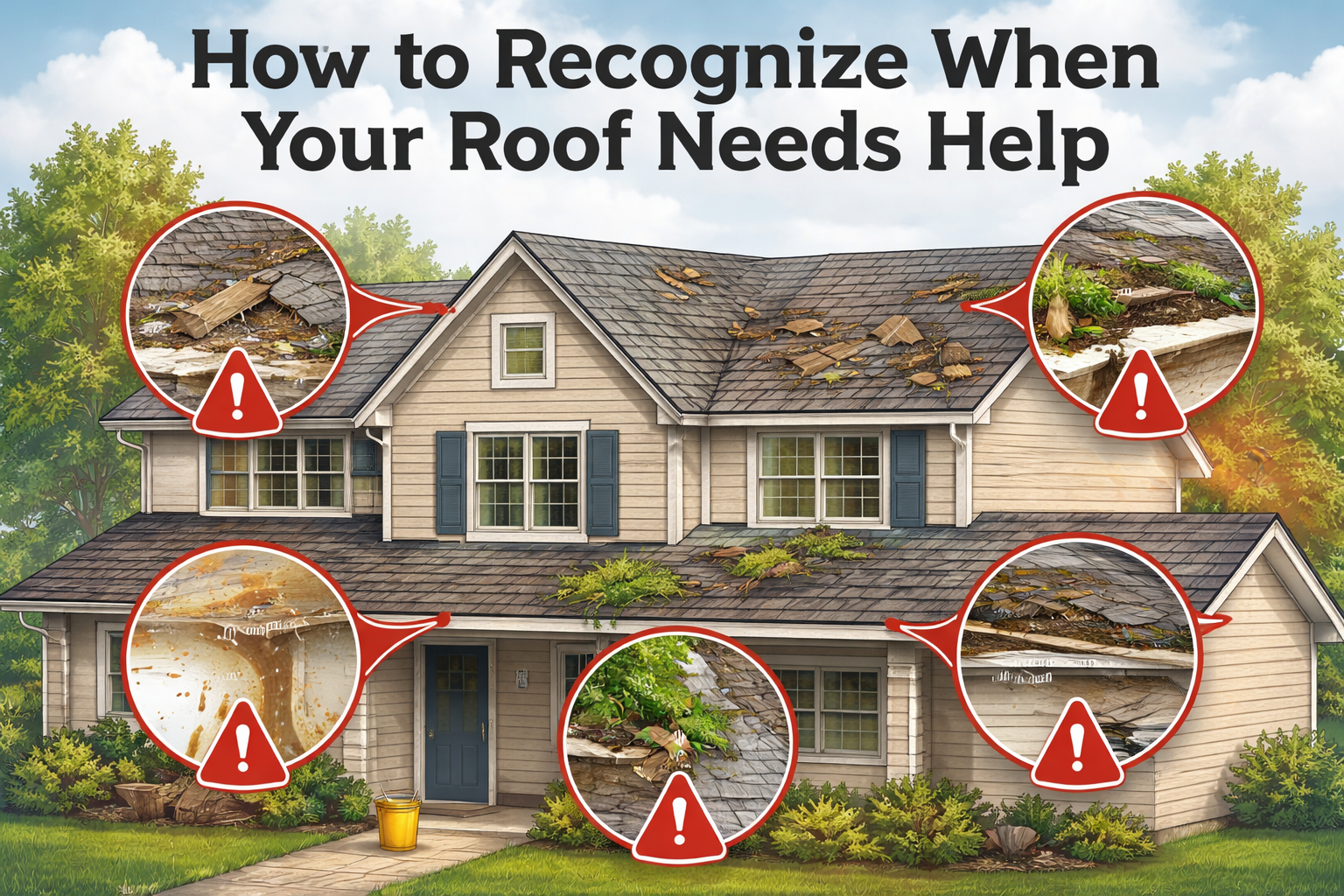
- Damaged, Missing, or Distorted Shingles
Walk around your house (or examine from the street) and look for:
Shingles that are curling at the edges or corners
Tabs that are cupped (edges lift upward) or buckling (wavy instead of flat)
Cracks, blisters, or shingles that are missing altogether
Shingles whose surface looks “bald” because the protective granules are gone
These conditions mean your shingles are no longer capable of doing their job — letting water in becomes a real risk.
—
- Granules in the Gutters & Bald Spots
If you notice a lot of granule‐like gritty material collecting in gutters after rain or storms, that’s more serious than it
might seem. These granules protect shingles from UV and weather damage. When they’re gone, the roof ages fast.
Bald patches on the roof surface are a visible sign of this.
—
- Dark Streaks, Moss, Alga,e or Lichen
Moss and algae may look harmless — but they often signal underlying issues. Moss retains moisture, which can lift
shingles or degrade the underlayment. Dark streaks from algae or mold show that the roof surface is staying damp
or shrouded from sunlight. Both speak to reduced performance and possibly hidden damage.
—
- Leaks, Water Stai, ns and Interior Damage
We all know what a water stain on the ceiling means: water got in somewhere. If you notice discoloration on drywall,
sagging spots, peeling paint near walls or ceilings, or damp insulation in the attic,c — your roof is being compromised.
Even small leaks are not “just cosmetic” and often hide wider problems with flashing, underlayment, or deck.
—
- Sagging Roof Deck or Uneven Roofline
Stand back and look at your roof from a distance. If the ridge line dips, waves, or looks uneven, there may be
structural damage. Internally, this shows up as sagging decking, cracked boards, and daylight peeking through the attic
boards. This is not minor — it almost always means full replacement rather than repair.
—
- Damaged or Old Flashing and Roof Penetrations
The places around chimneys, vents, skylights, valleys — these are the vulnerable spots. Flashing and seals here
prevent water from entering at weak joints. If you see cracked, rusted, or missing flashing — or caulking that’s worn
out — your roof’s barrier is compromised. Repeated leaks at these points often mean the roof system as a whole is
under stress.
—
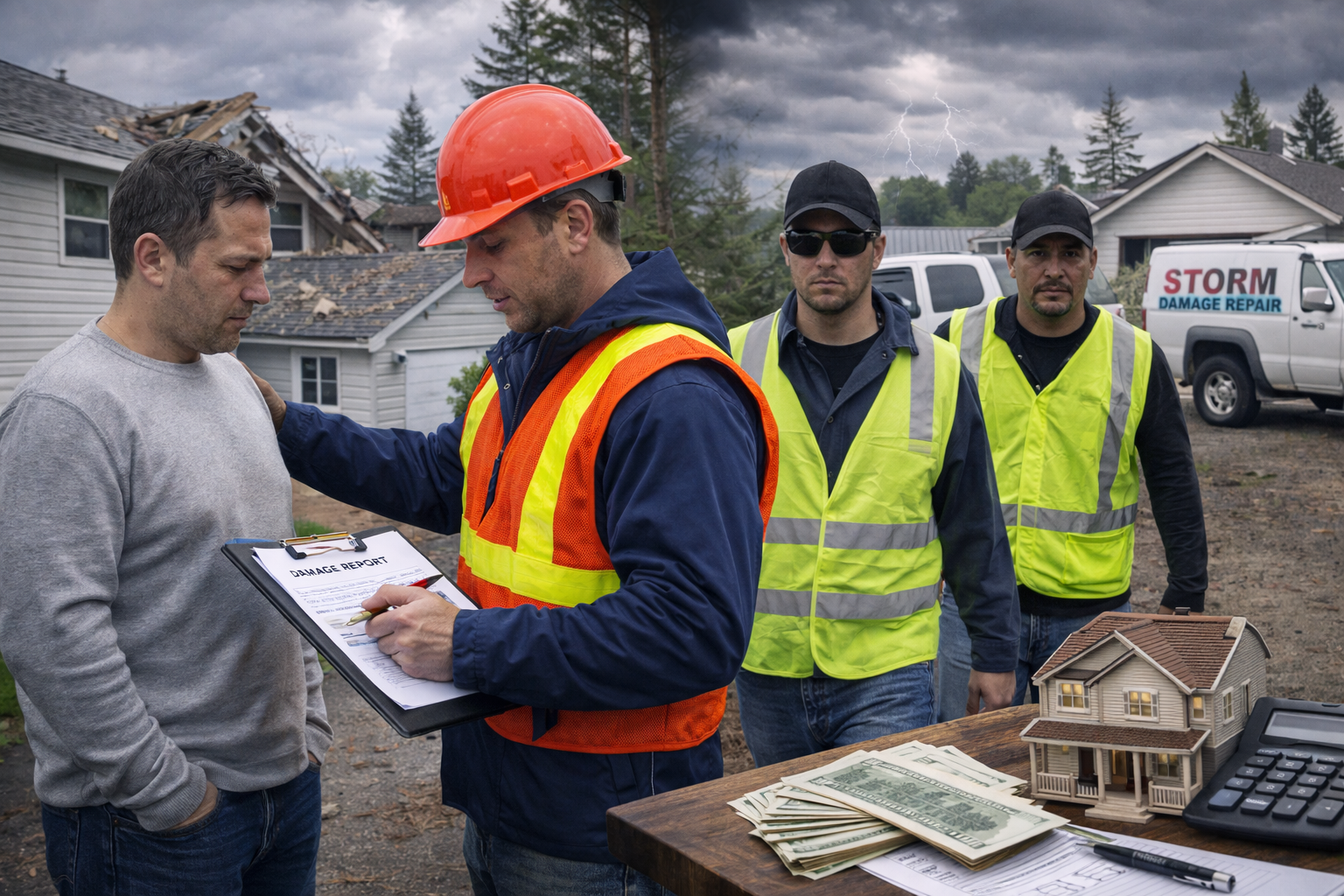
- Storm or Impact Damage
After a severe weather event (hail, wind, fallen branches), go and inspect the roof. Indentations in shingles, missing
shingles, debris impacts,s or lifted tabs are signs of damage that may not self-fix. If damage is widespread, patching
may not suffice — you might need to consider a replacement.
—
- Rising Energy Bills & Poor Ventilation
Sometimes the sign is not directly visible overhead. If your air-conditioning or heating bills go up without an obvious
reason, your roof might be part of the cause. Poor insulation, failed ventilation under the roof deck, or excessive heat
entering the attic can all point to an aging or poorly performing roof system. High humidity, ice dam formation (in
cold climates), or attic warm spots are also clues.
—
- Frequent Repairs & Escalating Costs
If you find yourself calling roofers regularly for leaks, replacing flashing, patching shingles, or sealing flashings — and
the cost keeps creeping up — you should ask: Is regular repair still worth it? When the number of repairs and
associated costs are on a steady upward trend, a full replacement may be more cost-effective in the long run.
—
Assessing: Repair vs. Replacement
When you see one or two minor damaged spots — perhaps a few missing shingles or a small leak — repair might be
the right choice. But when multiple signs appear across the roof: aging shingles, structural dips, widespread damage,
interior stains, and high maintenance costs — that’s a strong case for replacement.
Here’s a helpful rule:
Repair if damage is limited, the roof is moderate in age, and the deck looks sound.
Replace if the roof is old, damaged, or if structural issues show up.
—
What to Do Next
- Schedule a professional inspection. A qualified roofing contractor or home inspector can safely evaluate your roof, check decking, ventilation, and flashing, and give you a clear diagnosis.
- Stay on top of maintenance. Clean gutters, trim overhanging branches, remove moss safely, and ensure attic vents are unblocked.
- Document the condition. Take photos of problem areas, so you have a record (useful for insurance, home sales, or planning).
- Budget for replacement if the roof is aging and showing multiple warning signs. Don’t wait for a major leak to force it.
- Ask about the hidden costs. Replacement may also mean underlayment, flashing, ventilation, or insulation upgrades. These are investments, but they extend the next roof’s life.
Your roof is the unsung hero of your home, silently defending you day after day. It doesn’t complain, but it does
signal when it’s nearing its limit. The more you pay attention to the signs above, the more you protect your home —
and avoid expensive surprises. Spotting damage early, choosing the right path (repair vs. replace), and acting in time
keeps your home safe, dry,ry and financially sound.
When your roof talks, listen — before you have to call a roofer under urgent conditions.