Concrete cutting and coring are crucial for shaping our cities and infrastructure, but they also
come with environmental challenges that need careful management. Here’s how we can
ensure these processes are eco-friendly and sustainable, benefiting both our communities
and the environment.
Environmental Impact: Keeping Air Clean and Noise Down
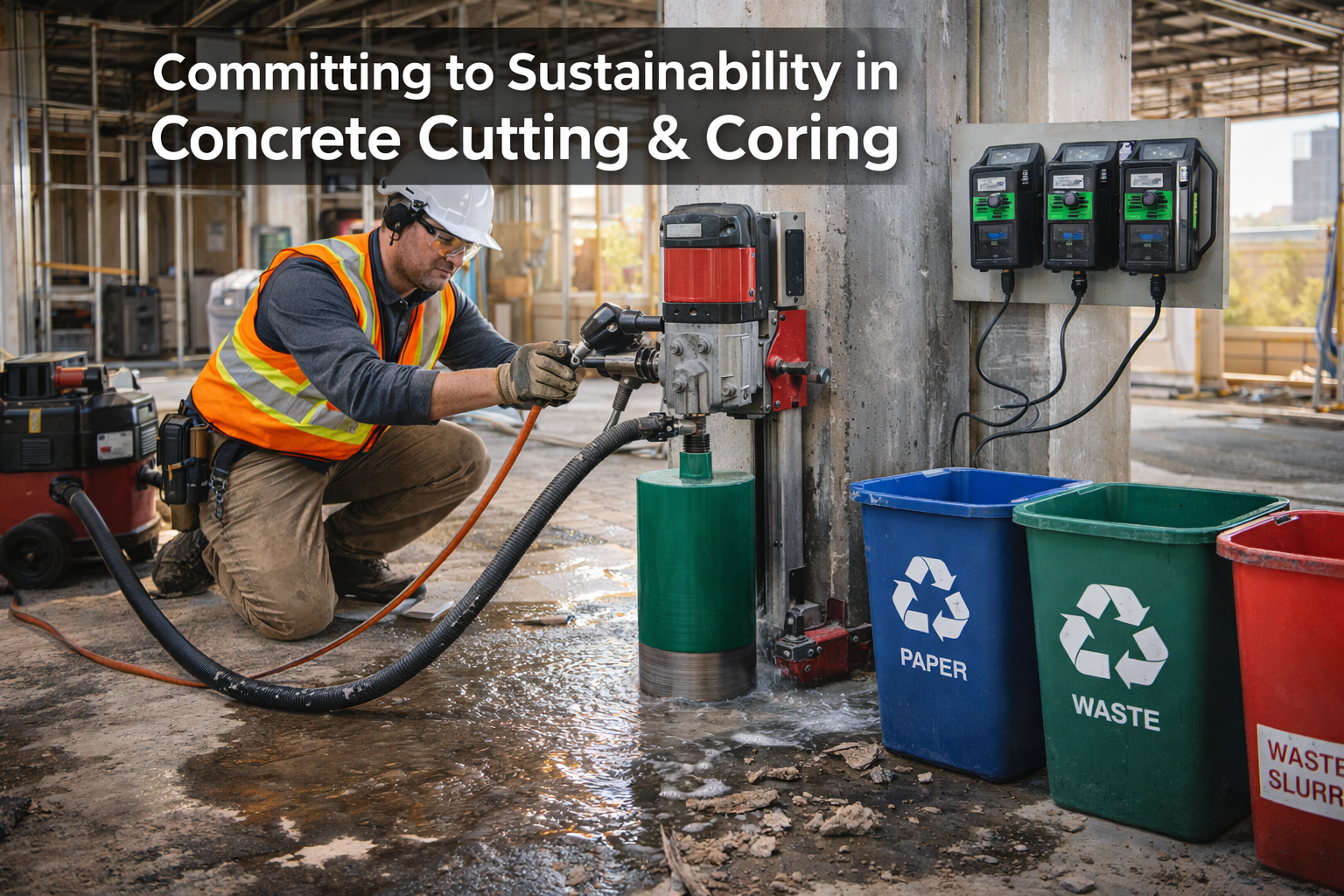
When we cut or core concrete, dust is a major concern. This dust isn’t just messy—it can
contain harmful substances like silica, posing health risks to workers and nearby residents.
To address this, we use advanced dust control methods such as specialized ventilation
systems and water suppression techniques. These measures help trap dust particles at the
source, protecting air quality and reducing health hazards. By investing in these
technologies, we prioritize the safety of our workers and minimize our environmental
footprint.
Noise pollution is another critical issue. The equipment used in concrete cutting and coring
can produce high levels of noise, impacting both workers and communities. To mitigate
these effects, we employ quieter machinery and schedule noisy activities during less
disruptive times. Implementing sound barriers and complying with noise regulations ensures
that our operations remain respectful of our surroundings and maintain positive relationships
with residents.
Embracing Sustainable Innovations
Advancements in technology play a pivotal role in enhancing sustainability in concrete
cutting and coring. Modern equipment with low-emission engines and electric-powered
options significantly reduce carbon emissions and environmental impact. Innovations in
cutting techniques, such as diamond tools and precision methods, not only increase
operational efficiency but also minimize material waste.
Water management is crucial for minimizing environmental impact during concrete cutting
and coring operations. Water is essential for dust suppression and cooling cutting blades,
but it’s vital to use it wisely. We implement water recycling systems and adopt efficient water
usage practices to conserve this precious resource and reduce wastewater discharge. By
integrating these water-saving measures into our operations, we contribute to environmental
sustainability and ensure responsible water stewardship.
Following the Rules: Staying Green and Compliant
Compliance with environmental regulations is essential for conducting concrete cutting and
coring activities responsibly. We adhere to stringent local, state, and federal laws that govern
air quality, noise levels, and waste management. Obtaining necessary permits and
maintaining transparent communication with regulatory authorities ensures that our
operations meet environmental standards and contribute positively to community well-being.
By prioritizing environmental compliance, we demonstrate our commitment to protecting
natural resources and fostering sustainable development.
Conclusion
In conclusion, prioritizing sustainability in concrete cutting and coring is crucial for creating
resilient and eco-friendly urban environments. By addressing environmental challenges
through innovative technologies and stringent regulatory compliance, we mitigate impacts on
air quality, noise pollution, and water resources. Embracing sustainable practices not only
enhances operational efficiency but also promotes community health and well-being.
At Domiark Construction, we are committed to leading by example in environmental
stewardship. By integrating advanced technologies and sustainable practices into our
concrete cutting and coring operations, we strive to minimize our environmental footprint and
contribute positively to the communities we serve. Our adherence to rigorous environmental
regulations ensures that our projects are conducted responsibly, safeguarding natural
resources and enhancing the quality of life for residents.